In short
- Quartz is the easy choice: consistent, non-porous and no sealing.
- Granite and quartzite are natural, very hard and heat-tolerant. Seal them once in a while.
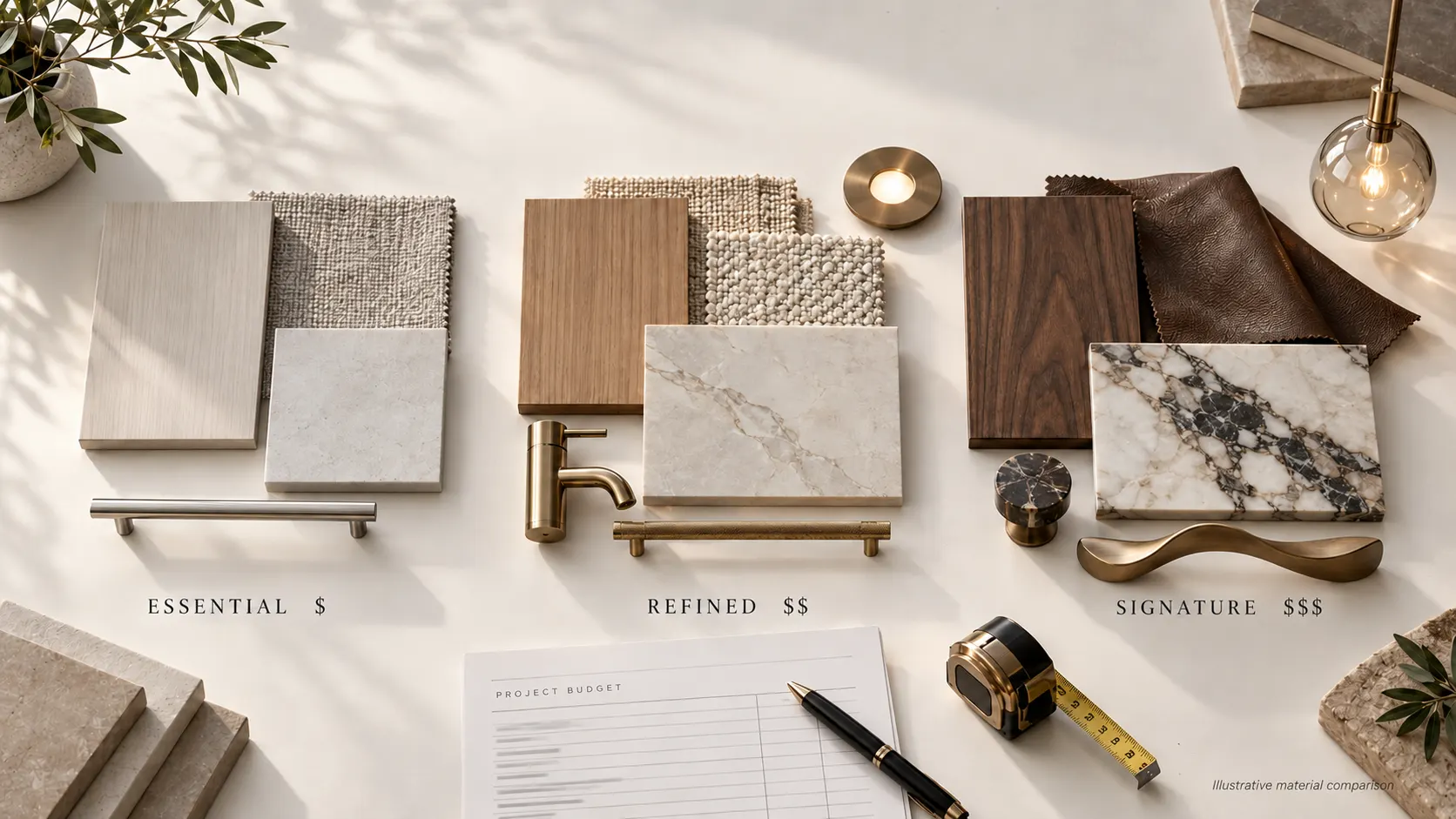
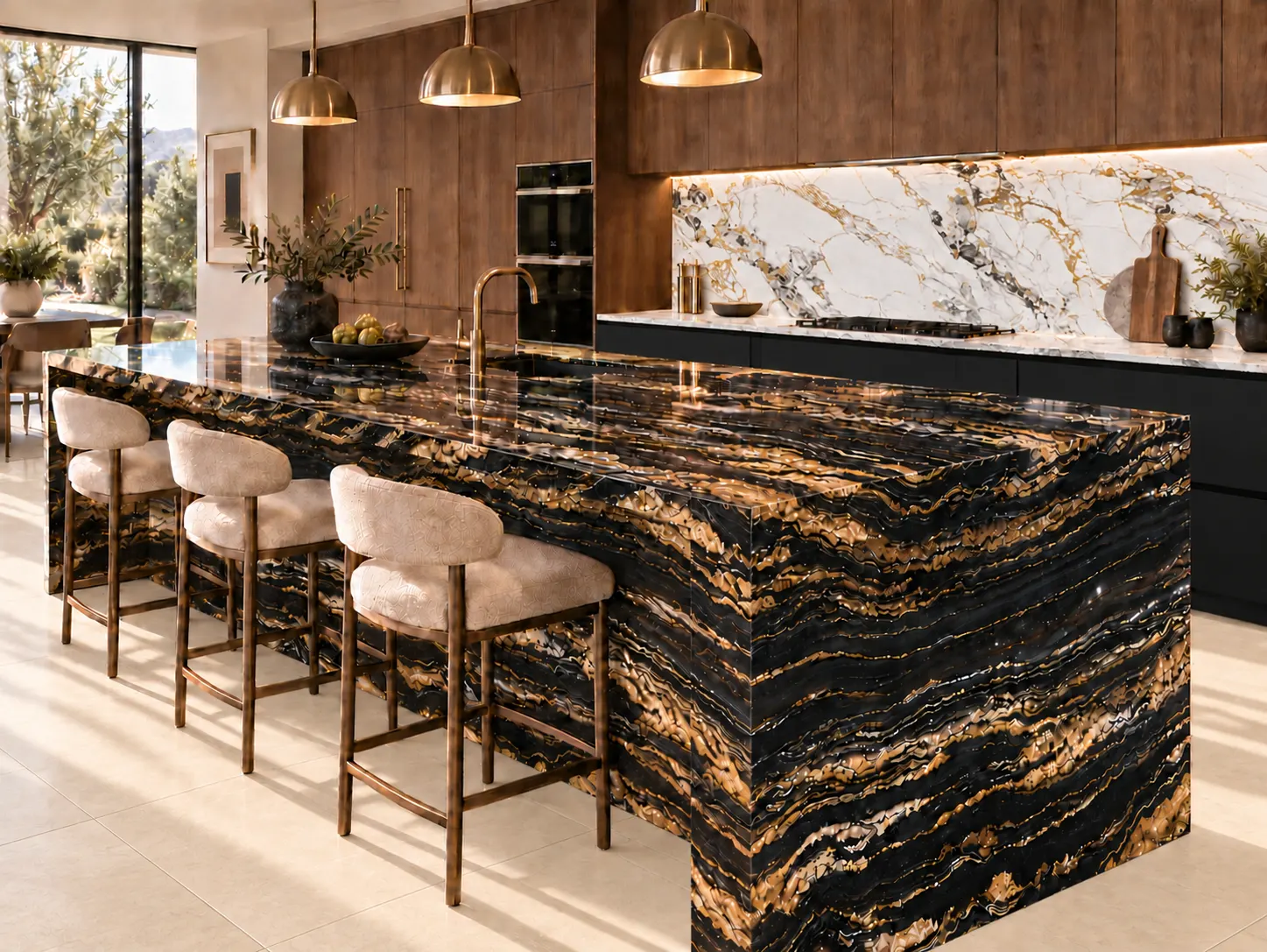
- Marble is beautiful and will etch. Choose it because you like how it ages, not in spite of it. The countertop is the surface you'll touch most in a kitchen, and often the most expensive single material in it. Most homeowners narrow it down to four options. Each is a good choice for someone. The trick is matching the stone to how you live, not just to the photo you saved.
The four options
Quartz
Engineered from crushed quartz bound with resin. It's consistent from slab to slab, comes in a huge range of colors, and doesn't need sealing because it isn't porous. The trade-off: resin doesn't like direct heat, so hot pans go on a trivet. Some quartz is designed to look like marble, and the best of it is very convincing.
Granite
A natural igneous stone, quarried in slabs. It's hard, resists scratches and handles heat well. Every slab is different, with flecks and movement that can't be repeated. Most granite benefits from sealing; some dense, dark granites barely need it.
Marble
Softer and more porous than the others. Acids like lemon juice, wine and vinegar will etch it, leaving dull marks, and it can stain if spills sit. People who choose marble usually do so knowing this. It develops a worn, lived-in look over time, the way it has in European kitchens for centuries. A honed finish hides etching better than polished.
Quartzite
A natural metamorphic stone that often looks like marble but is far harder, closer to granite in durability. It handles heat and resists etching better than marble. It's usually among the most expensive options, and it's harder to cut, so fabrication costs more too. Be careful with names: some stones sold as "quartzite" are actually softer marbles or dolomites. Ask for a scratch or acid test on a sample.
How they compare
| Quartz | Granite | Marble | Quartzite | |
|---|---|---|---|---|
| Natural or engineered | Engineered | Natural | Natural | Natural |
| Scratch resistance | High | High | Low | Very high |
| Heat resistance | Fair (use trivets) | High | Fair | High |
| Stain and etch resistance | Very high | High once sealed | Low (etches) | High once sealed |
| Sealing | Never | Every 1–2 years | Every 6–12 months | Every 1–2 years |
| Slab-to-slab variation | Little | A lot | A lot | A lot |
| Relative cost | $$ | $$ | $$$ | $$$$ |
| Cost ranges overlap a great deal. An exotic granite can cost more than a premium quartz, and a simple quartzite less than a rare marble. Thickness, edge profile and the number of cutouts matter too. For how stone fits into the wider budget, see what a renovation really costs. |
Five steps to choosing
1. Be honest about how you cook
Lots of citrus, wine and tomato, and you hate seeing marks? Quartz, granite or true quartzite. Happy for the surface to show its history? Marble.
2. Decide how much variation you want
Quartz gives you exactly what you saw in the sample. Natural stone gives you one-of-a-kind movement, but the slab in the warehouse may differ from the photo.
3. See full slabs, not just samples
A four-inch sample can't show veining that runs across a whole island. For natural stone, view the actual slabs and mark the ones you want. Ask where the seams will fall.
4. Choose the finish
Polished is glossy and shows fewer fingerprints on dark stone. Honed is matte and hides etching and scratches better. Leathered has a soft texture that hides almost everything.
5. Think about the whole room
The countertop sits between the cabinetry, the backsplash and the floor. Look at samples of all four together, in daylight and in the evening light of your own kitchen.
Common mistakes
- Choosing from a small sample. Natural stone needs to be seen at slab size.
- Trusting the name. Ask for a test on "quartzite" before you commit.
- Polished marble in a busy kitchen. It will etch. Honed is more forgiving.
- Ignoring seams. On a long run or a large island, plan where they go.
- Forgetting the edge. Thicker, mitered edges look substantial but add fabrication cost. Whatever you choose, the stone is templated after the cabinets are installed, so the final measurements always come from the room itself, not from the drawings.
Questions
Which countertop is the most durable? True quartzite and granite are the hardest and most heat-tolerant. Quartz is the most stain-resistant and needs the least care. Is quartz the same as quartzite? No. Quartz is engineered with resin; quartzite is a natural stone. They behave quite differently, especially with heat. Can I use marble in a kitchen? Yes, if you're happy for it to etch and age. Many people love marble for exactly that reason. Choose a honed finish and wipe up acids promptly. How thick should a countertop be? Three centimeters (about 1¼ inches) is standard for kitchens. Thinner slabs suit some modern designs, and thicker edges can be built up with a mitered edge.
Rather have it done for you? Our $500 site visit includes measurements, photos, a 2D floor plan and 3D views of your room, and it's credited to your project if you go ahead.
Book a free discovery call